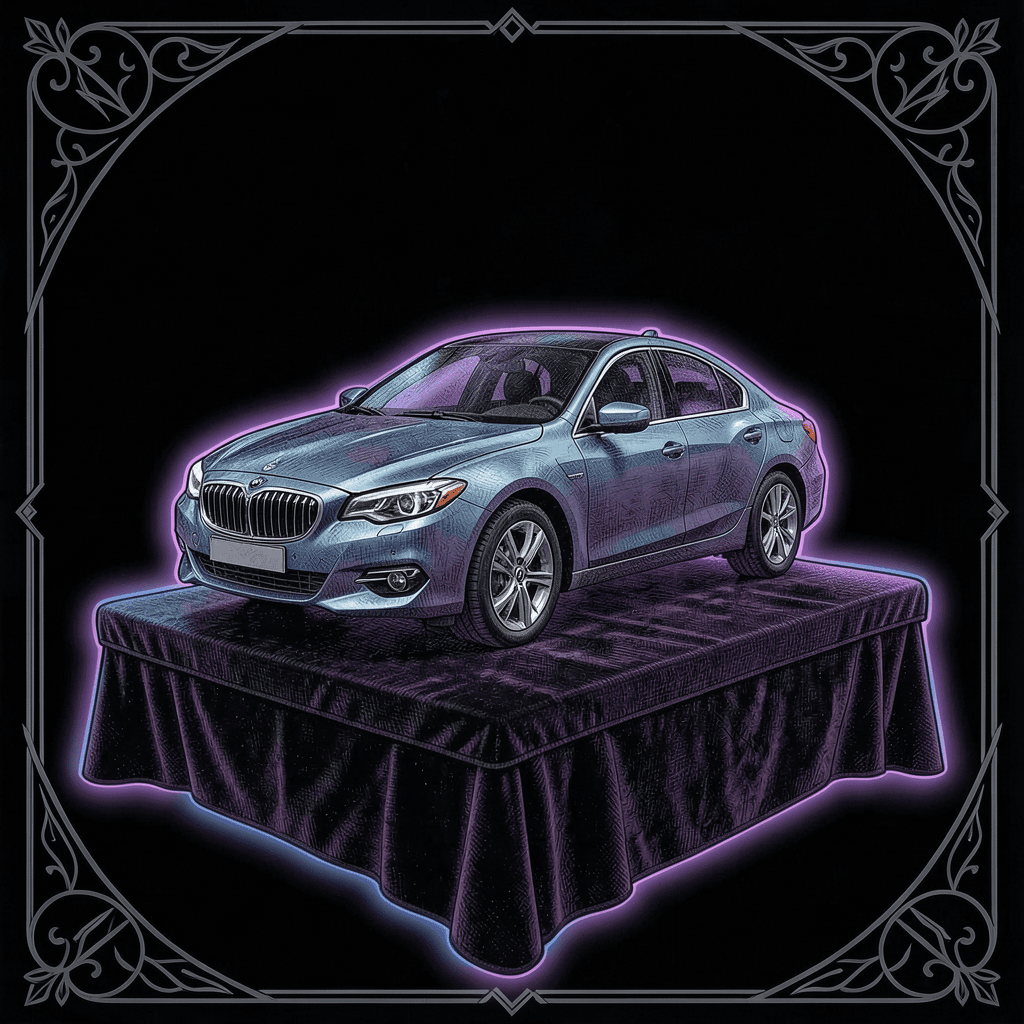
Car dream meaning — interpretation
What it means to dream about a car as a symbol: control over your direction in life — distinct from dreams about driving or a crash.
Somnovis editorial team
A car in a dream stands for how the dreamer travels — the direction, the pace, and above all who is in charge of both. It is the modern version of a very old image: the mount, the thing that carries a person through their life. That is why the single most informative detail in almost every car dream is not the car at all but the seating. Who is driving, who is beside them, and whether the dreamer chose the route are the questions every tradition below asks first.
A car that is new, well-maintained, or admired. Generally read as confidence in the direction a life is currently heading, or as pride in progress recently made. Worth noticing whether the car is the dreamer's own or one they are borrowing, which pulls the reading in quite different directions.
A car that won't start, stalls, or is blocked. The most commonly reported version, and the most frustrating to dream. It points towards effort that is not converting into movement — the intention present, the means apparently available, and nothing happening.
Someone else at the wheel. Riding as a passenger, sitting in the back, or discovering that nobody is driving at all are three distinct dreams, and dreamers usually remember exactly which one they had. Each describes a different relationship between what the dreamer intends and the life they are actually living.
Brakes or steering that do not respond. A specific and very common variant, and one where the feeling — that something assumed to be under one's control is not — is more of the content than the near-miss that follows.
A car that is stolen, lost in a car park, or simply the wrong one. A quieter dream than the others and often more unsettling. It tends to concern which direction actually belongs to the dreamer rather than whether they can steer.
What changes the reading. Ownership, control and condition, roughly in that order. Speed matters, and so does the road: a motorway, an unfamiliar town and a road the dreamer knows well are three different settings for the same vehicle.
What this dream does not mean. A car dream is not a warning to check the brakes or avoid driving, and none of the traditions here reads it as a forecast about traffic. A crash is a separate symbol with its own page. And people who drive for a living dream about cars constantly for the plainest of reasons.
Perspectives across traditions
Cars are modern and the classical Islamic corpus does not discuss them, which is worth saying openly rather than papering over with invented classical detail. What the tradition does address at length is the mount: the animal or vessel that carries the dreamer, read as their livelihood, their standing, and the means by which they move through their affairs. A sound, well-controlled mount is read as affairs proceeding well and status securely held, while falling from one is read as a fall in standing — the same reading the tradition gives to falling in general. That material is developed on the page for the horse, and this page borrows it rather than restating it.
Applied to a car, the classical questions transfer cleanly, and they are worth putting to a reader in the tradition's own shape rather than in modern paraphrase: is the dreamer carrying themselves or being carried, is the mount theirs, and is it under their control. The tradition also attaches an association with deliverance and safe passage to a vessel that carries someone through danger, which gives a journey completed a favourable weight in its own right. Be clear about the status of all this: it is a modern extension of an older reading, made by interpreters working within the tradition, not a classical ruling about cars. A reader who encounters a source stating a confident classical meaning for a car specifically has good reason to doubt it.
In a Jungian reading a car is the vehicle of the ego's passage through life — how the dreamer moves, at what speed, and at whose direction — and the single most informative detail is who is at the wheel. Driving, riding as a passenger, sitting in the back, and finding that nobody is driving at all are read as four different relationships between conscious intention and the life actually being lived, and they are not degrees of the same thing. Brakes and steering carry the specific question of will: something the dreamer assumes to be under their control behaving as though it is not.
A car is also a mass-produced object, and this reading is willing to take that seriously rather than treating it as incidental. A vehicle identical to everyone else's raises a persona question — the life being lived to a standard specification — whereas a distinctive, customised or wrecked one raises a personal one. What analytical psychology will not do is hand over a table of car meanings, and the reason is methodological rather than a hedge: Jung was insistent that a symbol's meaning is not fixed in advance of the dreamer, and a modern image like this one, with no mythological history behind it, is exactly where that principle bites hardest. The dreamer's own associations to that particular car — whose it was, what it cost, what it meant to acquire — carry more of the reading than anything a dictionary can supply.
The Zhou Gong Jie Meng corpus is a living body of folk material that has gone on accreting modern items, and cars belong to that recent layer rather than to anything classical. That is interesting rather than embarrassing, and it is worth telling a reader, because it distinguishes a car reading from the far older material on water, animals or teeth. Within that layer the vehicle is read through career and forward motion: acquiring a car is associated with advancement and increased means, driving smoothly with affairs progressing, and a vehicle that will not start, stalls, or is blocked with obstruction in one's work. A car belonging to someone else is read as depending on another person's support rather than one's own means.
The register the image sits in for a Chinese reader is worth naming, because it is not the register a Western reader would assume. The standard blessing found on vehicle charms is for safe coming and going, and its travelling form — a safe road the whole way — is what is said to anyone setting off; the folk concern with a car is safety and smooth passage before it is status. One proverb belongs here above all others: when the cart reaches the mountain there will be a road, usually said together with its second half, that when the boat reaches the bridge it will straighten of itself. It is among the most widely used consoling proverbs in Chinese, it is built on a vehicle, and it is the register a blocked or stalled car in a dream lands in — the obstruction is real and it is not final. Note that the cart in it is a cart and not a motor car: the proverb is old and the modern image has inherited it, which is the same borrowing the classical Islamic entry above makes with the mount, and is better flagged than glossed over. The crash is a separate image with its own page and its own folk material, and nothing here should be carried across to it.
The modern layer has nevertheless been fitted with entries in the usual manual form, and they are worth having in that form. The folk dream books give readings of the shape: a vehicle in motion portends promotion, a vehicle without wheels portends a matter that will not come off, and a vehicle that will not start or is blocked portends obstruction in one's work. Note that these read the vehicle's condition rather than its ownership or its cost — advancement and increased means are a cultural association around cars rather than something the dream material rules on. The blessing attached to the image belongs to the safety-first register already described: 「一帆风顺」 (yī fān fēng shùn), a single sail with the wind straight behind it, which began as a wish for a boat and is now written on a card for anyone setting off by road.
Sources
The tradition sections draw on these works. That is not a claim that every sentence is a quotation from them. Authorship of the treatise attributed to Ibn Sirin is disputed. The Chinese dream manual is paraphrased: its wording differs by version, so no edition, chapter, or date is named.
- Artemidorus of Daldis, Oneirocritica (2nd century).
- Muntakhab al-Kalām fī Tafsīr al-Aḥlām, the dream book attributed to Ibn Sirin.
- Zhou Gong Jie Meng (周公解梦).
- C. G. Jung, Man and His Symbols (1964), and the Collected Works.
Was your dream different?
Tell us exactly what you saw — our deeply trained AI will work through every detail and nuance of your specific dream.
Get a personal reading