Sleepwalking is not acting out a dream
Sleepwalking comes from deep non-REM sleep, not from dreams. What actually triggers it, and why acting out dreams is a different condition entirely.
Somnovis editorial team
- Sleepwalking is an NREM parasomnia arising from deep sleep in the first third of the night, not from dreaming.
- It is more common in children, persists into adulthood in a small percentage, and is strongly familial.
- Triggers include sleep deprivation, alcohol, fever and some medications.
- Physically acting out dreams is REM sleep behaviour disorder — a different condition, with a documented association with later neurological disease.
The popular image of sleepwalking has a person moving through their dream — following a dreamt path, reaching for a dreamt object, arms outstretched. That image is wrong, and correcting it is the most useful thing this article can do, because the condition it is confused with is a genuinely different one that does warrant medical attention.
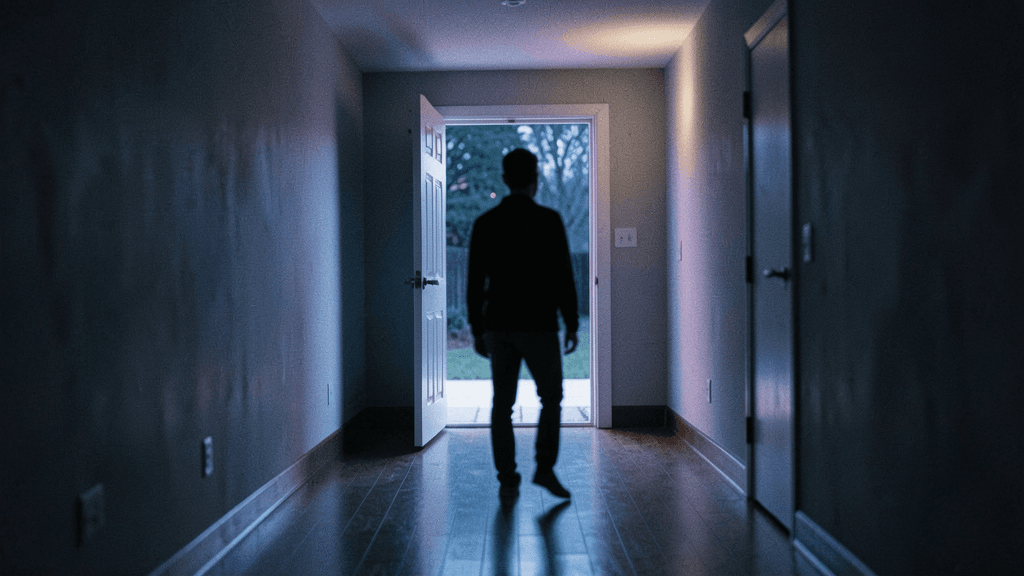
Sleepwalking arises from deep non-REM sleep, which is the stage furthest from vivid dreaming. It is a parasomnia in the same family as night terrors, described separately in this section, and it works the same way: a partial arousal in which motor systems come online while consciousness does not. Because deep sleep is concentrated in the first third of the night, sleepwalking mostly happens in the first hours after falling asleep. The sleepwalker's eyes are typically open but glassy, their expression is blank, and their behaviour is automatic — walking, moving objects, dressing, occasionally something more elaborate like leaving the house. Responses to speech are absent or minimal, and the whole episode is usually forgotten.
Meanwhile, during REM sleep — where the vivid dreaming happens — the body is paralysed. That is the point of REM atonia, described in this section's article on REM sleep: voluntary muscles are actively inhibited so that dreamt movement stays dreamt. A person in REM sleep cannot get up and walk, because the mechanism that would let them do so is switched off. Sleepwalking is therefore not dream enactment; it is complex automatic behaviour emerging from the least dream-like stage of sleep.
Sleepwalking is common in children and much less common in adults, persisting into adulthood in a small percentage of cases. The familial pattern is strong — a person who sleepwalks frequently has relatives who sleepwalk or have night terrors — which points to an inherited predisposition rather than a psychological cause. The triggers are the ordinary ones for this family of parasomnias: sleep deprivation, which is the single most reliable precipitant, irregular schedules, alcohol, fever and illness, stress, and some medications. Anything that deepens deep sleep or fragments it makes an episode more likely.
Practical management is mostly environmental. Because the person is not aware and will not remember, the priority is preventing injury: securing doors and windows, clearing obstacles and cords, avoiding upper bunks, and locking away anything dangerous. Waking a sleepwalker is not dangerous in the way folklore claims, but it is unhelpful — it tends to produce prolonged confusion. Guiding them gently back to bed usually works better than confronting them.
The condition people are actually thinking of when they picture dream enactment is REM sleep behaviour disorder, and it is a different thing entirely. In RBD, the REM atonia mechanism fails, so movements generated by the dream do reach the body. People with RBD shout, punch, kick and leap, and unlike sleepwalkers they can often report a matching dream immediately afterwards — usually a confrontational or defensive one. Injuries to the sleeper or a bed partner are common. It occurs mainly in older adults and more often in men.
RBD matters for a reason beyond the injuries. It has a documented association with later neurological disease: a substantial proportion of people diagnosed with RBD go on to develop a neurodegenerative condition, often years or even decades afterwards. That association is well established in the research literature, and it is why RBD is treated as a signal worth investigating rather than a curiosity. It is not a certainty, and having acted out a dream once during a fever or after a heavy night is not the same as having RBD — the disorder is a repeated pattern, diagnosed properly with an overnight sleep study.
If you or someone you sleep near is physically acting out dreams — shouting, striking out, moving in ways that match a remembered dream — that is worth taking to a doctor rather than treating as a quirk. The same applies to sleepwalking that is frequent, causing injury, beginning for the first time in adulthood, or affecting your daily life.
Frequently asked
Dream symbols on this topic
Was your dream different?
Tell us exactly what you saw — our deeply trained AI will work through every detail and nuance of your specific dream.
Get a personal readingSources
- Sleep-medicine consensus on NREM parasomnias and disorders of arousal
- Clinical literature on REM sleep behaviour disorder and its neurological associations
- Research on familial patterns and triggers in sleepwalking
This article is for information only and is not a substitute for medical advice.