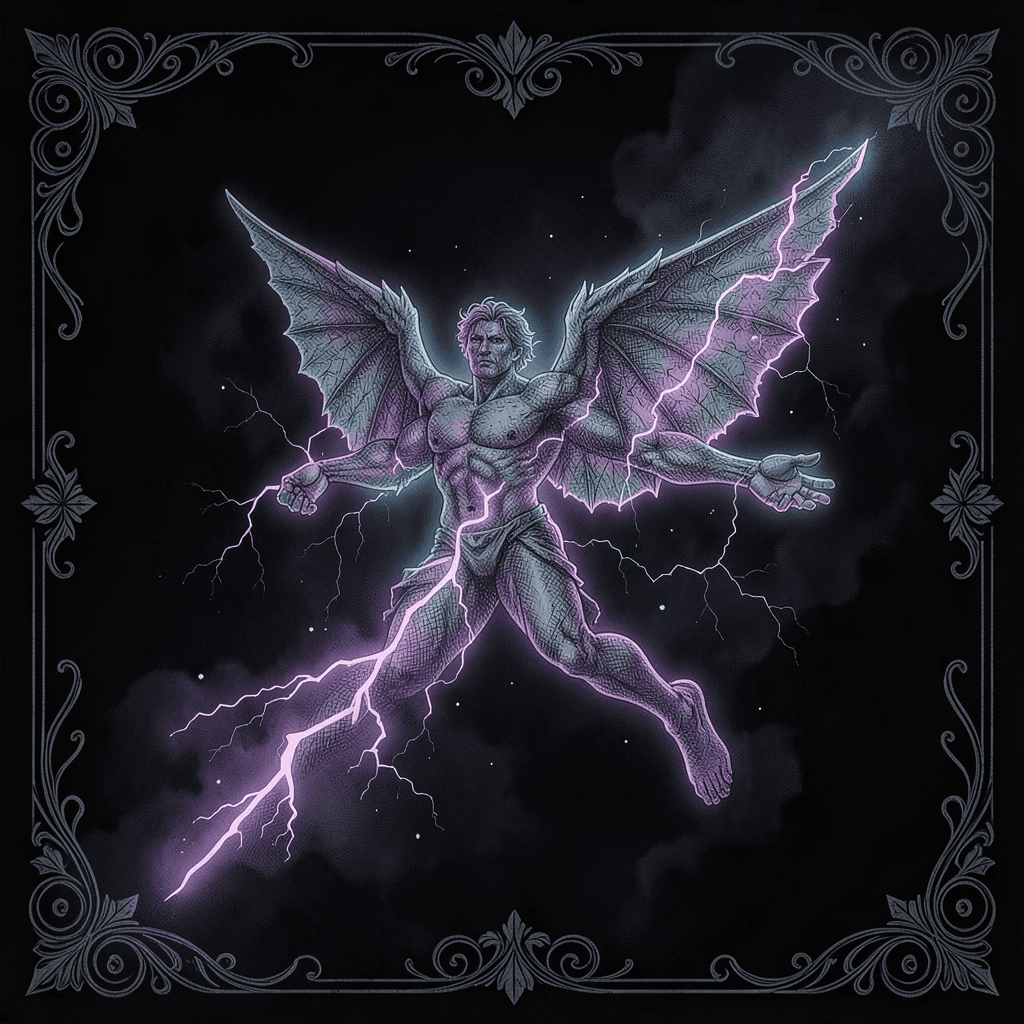
Lightning dream meaning — interpretation
What it means to dream about lightning: a sudden flash of insight versus being struck, and different traditions' views.
Somnovis editorial team
Lightning stands apart from rain and storm for its suddenness, and for one property no other weather image has: it illuminates without lasting. The flash shows the whole landscape for an instant and returns the dreamer to the dark holding an afterimage, which is why the readings below turn on what was seen rather than on the strike.
A flash that lights up the scene. Usually read toward sudden clarity — something understood all at once after a stretch of groping. Where the flash reveals a specific thing, the dream is usually about that thing rather than about the lightning.
Being struck, or lightning striking nearby. Reads differently from watching: energy the dreamer did not generate and cannot take credit for. The struck tree — something tall and rooted, marked from above — is a persistent image in this material.
Lightning followed by rain, or lightning with no rain at all. The most useful distinction on the page, and one tradition below builds its whole reading on it.
What changes the reading. Whether the dreamer watched or was hit, and what happened next. Thunder is a separate image — the voice rather than the flash — and belongs to its own article.
What it does not mean. Nothing here is a judgement on the dreamer, and no reading on this page is a claim about anyone's conduct. One tradition below carries a strong judgement register; it is reported as that tradition's, not endorsed.
Perspectives across traditions
The anchor here is genuine and unusually clean: this tradition's own scripture shows lightning as fear and hope at once, in the sura named for thunder, ar-Raʿd — and that a sura is named for a weather phenomenon at all tells a reader how seriously the register is taken. The pairing runs through everything below, because the same flash that threatens is the one that announces rain.
The corpus follows that by reading lightning through what comes after it: lightning followed by rain toward provision or relief arriving quickly, and lightning alone, or with fire and no rain, toward a threat that stays a threat. Reading an image by its outcome rather than by a fixed value is a real classical habit, and it is more useful to a dreamer than any ruling would be. Beyond it there is the swiftness register — lightning as a decree or a command executed faster than it can be argued with, and in some strands the swift act of an authority. Thunder is read separately in this tradition, as the voice rather than the flash, and belongs to its own article.
The core line is sudden irruption, and under it lies the property that separates lightning from every other weather image: illumination without duration. The flash shows the landscape whole for an instant and hands the dreamer back to the dark holding an afterimage, which is exactly the structure of an insight that has arrived and cannot yet be lived — the dreamer knows what they saw and cannot get back to it.
Analytical psychology reads the strike itself as energy the ego did not generate and cannot claim credit for, which is why being struck reads so differently from watching, and why the struck tree recurs: something tall, rooted and long-standing, marked from above rather than by anything it did. One practical note that saves a good deal of over-reading: where the flash reveals a specific thing, the dream is usually about that thing and not about the lightning at all.
The folk dream books give readings of the shape, paraphrased and hedged, that lightning illuminating the dreamer or the house portends a matter suddenly made plain or a sharp turn in fortune; that being struck is unfavourable; and that lightning and thunder together read toward news arriving with force, or toward the anger of someone above the dreamer.
The mechanism behind the judgement register is what makes it intelligible rather than arbitrary, and it is concrete: in folk religion 「雷公」 (Léigōng, the Duke of Thunder) and 「电母」 (Diànmǔ, the Mother of Lightning) work as a pair, and her flash lights the target so that his bolt strikes it accurately. Chinese treats the two as one compound; the sound, the Duke himself and the spring-thunder calendar material belong to the thunder article rather than to this one. What lightning does own is the oath. 「五雷轰顶」 (wǔ léi hōng dǐng, five thunderbolts on the crown of the head) is the standing self-imprecation, invited by a person swearing to their own honesty; 「遭雷劈」 (zāo léi pī) is current colloquial speech for what befalls someone who has done something unforgivable, and 「天打雷劈」 (tiān dǎ léi pī, may heaven strike with thunder) is its fuller and more emphatic form. It matters that neither of those last two is about weather at all — they are retribution formulae used in oaths and curses, and reading them as descriptions of being hit by lightning would quietly turn a moral idiom back into a weather omen. Two more the language supplies: 「晴天霹雳」 (qíng tiān pī lì, a thunderclap from a clear sky), for news that arrives with no warning and changes everything, which is the closest phrase to what a lightning dream usually feels like; and 「电光石火」 (diàn guāng shí huǒ, lightning's flash, a spark off flint), for extreme brevity, the exact companion to the illumination-without-duration reading above. All of this is reported as what the tradition holds, and this article passes no judgement on the dreamer.
Sources
The tradition sections draw on these works. That is not a claim that every sentence is a quotation from them. Authorship of the treatise attributed to Ibn Sirin is disputed. The Chinese dream manual is paraphrased: its wording differs by version, so no edition, chapter, or date is named.
- Artemidorus of Daldis, Oneirocritica (2nd century).
- Muntakhab al-Kalām fī Tafsīr al-Aḥlām, the dream book attributed to Ibn Sirin.
- Zhou Gong Jie Meng (周公解梦).
- C. G. Jung, Man and His Symbols (1964), and the Collected Works.
Was your dream different?
Tell us exactly what you saw — our deeply trained AI will work through every detail and nuance of your specific dream.
Get a personal reading