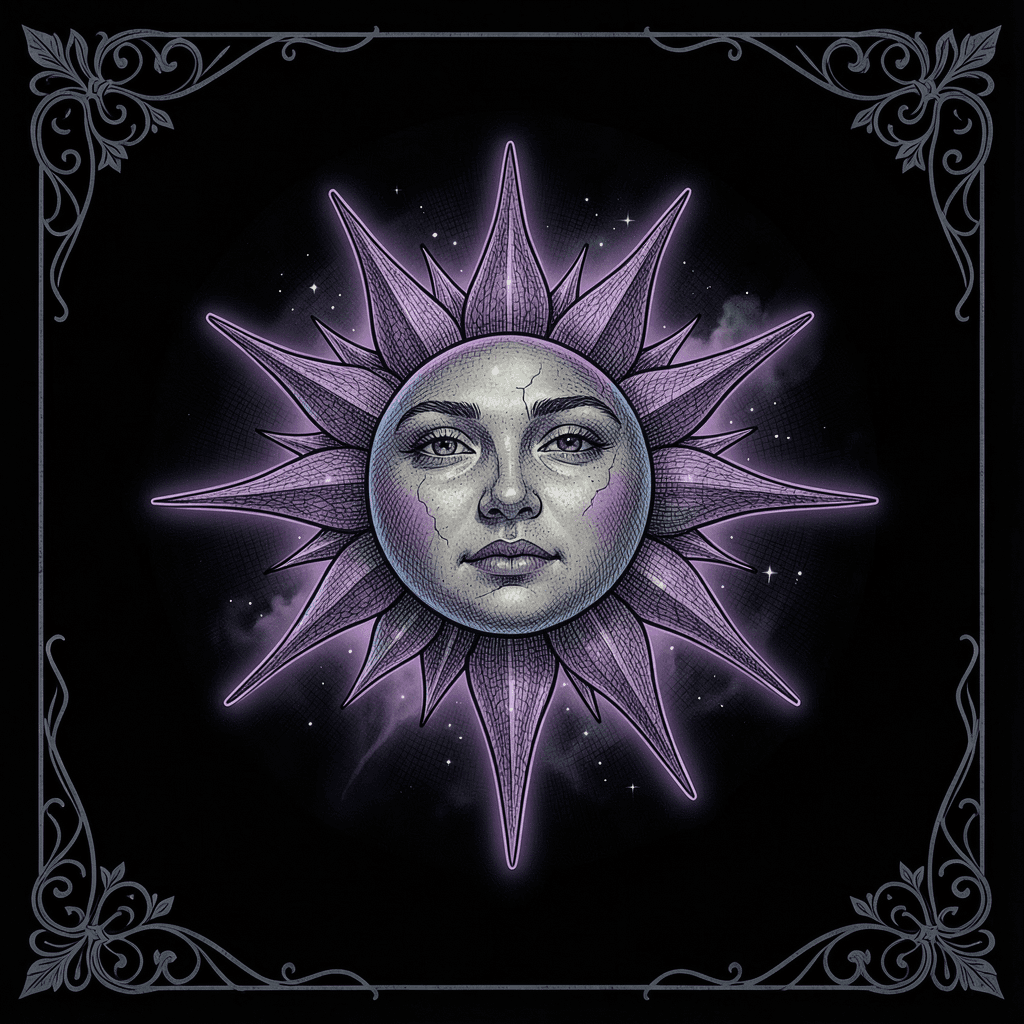
Sun dream meaning — interpretation
What it means to dream about the sun: warmth and clarity versus a blinding or setting sun, and different traditions' readings.
Somnovis editorial team
The sun in a dream is one of the most consistently positive symbols across interpretive traditions: vitality, clarity, and a sense of things being seen for what they are, without shadow or ambiguity. Its meaning shifts mainly with intensity and position rather than with any hidden double reading.
A warm, rising sun. A gentle sunrise or steady warmth is usually read as a sign of renewed energy, confidence, or a difficult period genuinely coming to an end — a fresh, literal dawn.
A blinding, scorching, or setting sun. A sun too bright to look at, or one sinking below the horizon, tends to point instead to a source of vitality or authority the dreamer feels is currently too intense to handle, or one that is fading from their life.
What changes the reading. The sun's position and behaviour carry the dream: rising, at noon, setting, eclipsed, or too bright to look at. The traditions below read those states as statements about authority, consciousness and fortune respectively — and they agree to a surprising degree that a rising sun and a darkened one are opposite dreams, whatever else they disagree on.
What it does not mean. A sun dream is not a weather report and not a guarantee of success; even the most favourable traditions below reserve their readings for particular states of the sun, not for its mere appearance. And a scorching or blinding sun is not simply more of a good thing — every tradition here treats excess of light as its own, distinctly less comfortable, image.
Perspectives across traditions
The classical Islamic material on the sun begins with an actual dream in scripture. In Surah Yusuf, Joseph dreams that the sun, the moon and eleven stars prostrate to him, and tells his father — who warns him not to tell his brothers. The tradition reads the sun in that dream as the father, the moon as the mother and the stars as the brothers, and that reading is the foundation for the corpus's treatment of the sun generally: a sovereign, a father, a ruler, the head of something. A rising sun is read as an authority ascending or a matter coming to light; an eclipsed or fallen sun as that authority in trouble.
The distinction between the source and the tradition is worth keeping visible. The Yusuf dream is a dream with an interpretation reported in the text itself; the corpus rulings that grew from it are a tradition's extensions of that anchor. Both are real, but they are not the same kind of thing — and this article reports the second as the tradition's practice, not as scripture.
In a Jungian reading the sun is consciousness itself: the ego's light, the ordering and distinguishing principle, as against the moon's reflected and cyclical mode. The pairing is not this article's invention — Sol and Luna are a genuine alchemical pair, and Jung worked at length on their union, the coniunctio, in his alchemical writing. A dream organised around the sun is therefore read as concerning the dreamer's conscious position: what it illuminates, what it insists on, and what it outshines.
What this tradition watches for is the sun's excess. Light too strong to see by, a sun that scorches rather than warms, a dreamer staring directly at it — these are images of consciousness inflated, a real theme in analytical psychology: the ego mistaking itself for the whole sky. The favourable version is not maximum light but workable light, sun by which things can actually be seen — which is why a gentle sunrise and a blinding noon are opposite dreams in this reading, though both are bright.
The folk dream books rule on the sun directly, and favourably at its rising: readings of the shape that the sun just risen portends a rise in rank and name, that sun and moon shining on the body portends great honour, and that a solar eclipse portends trouble. One further manual entry belongs here and needs careful statement: the sun entering the breast is given as portending the birth of a distinguished child — reported strictly as what the tradition holds, and nothing in it means a dream can reveal anything about an actual pregnancy or an actual child.
The sun is 阳 (yáng) in the most literal sense — the active, bright, male-coded principle in the pairing with the moon — and a dream containing both lights can be read as a question of their balance; but the sun's readings stand perfectly well on their own, as the entries above show. The everyday association is at least as strong as the doctrinal one: 日 (rì) is the ordinary word for a day, and for one's days generally, so a rising sun reads as life improving and a setting one as life declining, quite apart from any philosophy. 「如日中天」 (rú rì zhōng tiān, like the sun at noon) is the phrase for a career at its height.
Sources
The tradition sections draw on these works. That is not a claim that every sentence is a quotation from them. Authorship of the treatise attributed to Ibn Sirin is disputed. The Chinese dream manual is paraphrased: its wording differs by version, so no edition, chapter, or date is named.
- Artemidorus of Daldis, Oneirocritica (2nd century).
- Muntakhab al-Kalām fī Tafsīr al-Aḥlām, the dream book attributed to Ibn Sirin.
- Zhou Gong Jie Meng (周公解梦).
- C. G. Jung, Man and His Symbols (1964), and the Collected Works.
Was your dream different?
Tell us exactly what you saw — our deeply trained AI will work through every detail and nuance of your specific dream.
Get a personal reading