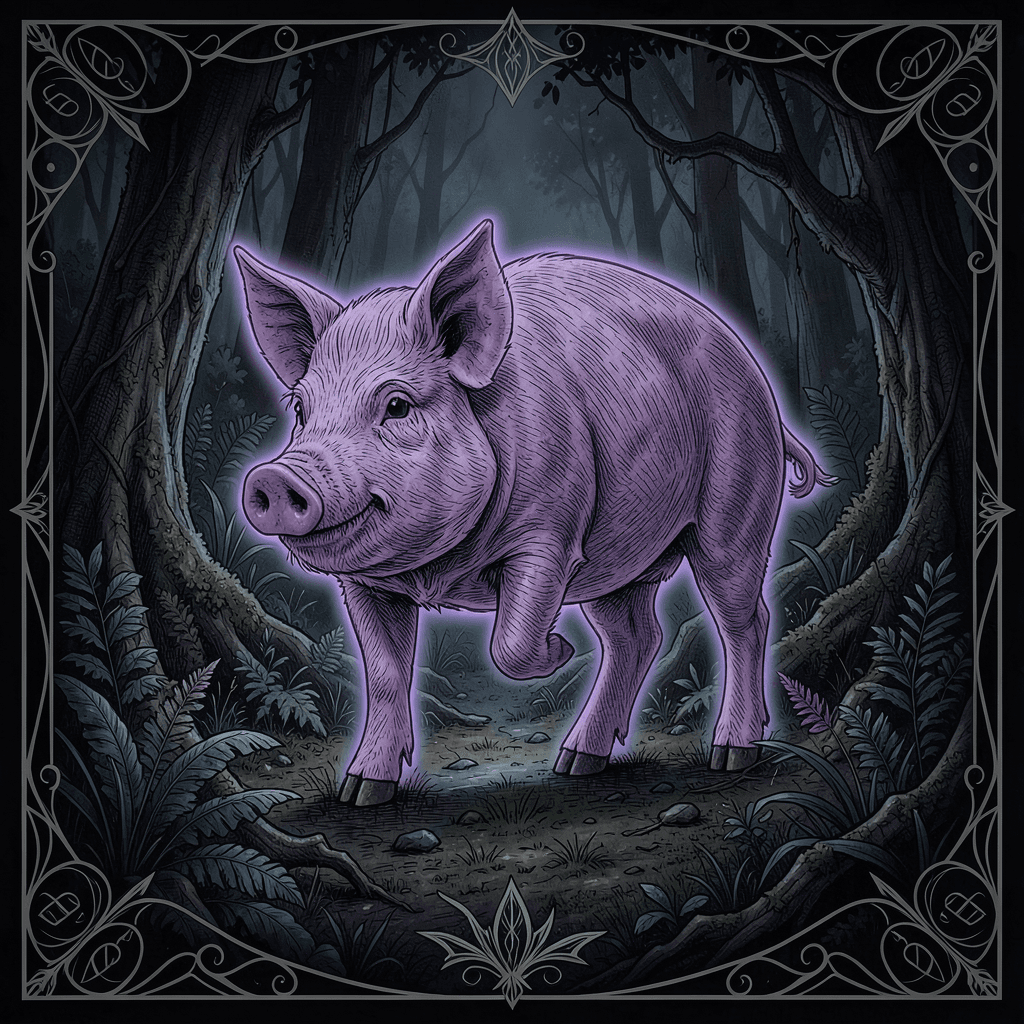
Pig dream meaning — interpretation
What it means to dream about a pig: abundance and indulgence, and how different traditions read this symbol very differently.
Somnovis editorial team
Few animals split interpretation as sharply as the pig: in some traditions it's one of the most auspicious dream symbols there is, tied to wealth and plenty, while in others it points toward excess or an uncomfortable indulgence — worth knowing before reaching for either reading.
A fat, healthy pig, or many piglets. This version of the dream is broadly linked to material abundance arriving, sometimes quite suddenly — a windfall the dreamer hasn't necessarily earned through direct effort.
A dirty, aggressive, or unwell pig. A pig that seems filthy or in distress instead tends to point toward guilt over indulgence, or a warning that gain pursued too greedily may come at an uncomfortable cost.
What changes the reading. Condition and setting decide most of it: a plump pig in a pen differs from a filthy one loose in the house, and a herd differs from a single animal. Whether the dreamer feeds the pig, eats, or is merely watched by it also matters — the traditions below turn on ownership and appetite, and the dream usually says whose appetite it was.
What it does not mean. A pig dream is not a comment on the dreamer's body, habits, or worth. The three traditions below disagree about this animal more sharply than about almost any other — categorical rejection at one pole, an omen of plenty at the other — and holding that contrast honestly is more useful than forcing the dream into either half of it.
Perspectives across traditions
The pig is one of the few symbols in the classical Islamic dream-interpretation tradition with no favourable strand at all, and it is more honest to say so plainly than to manufacture balance. The animal itself is forbidden in Islamic law, and the corpus reads it accordingly: unlawful gain, wealth with something wrong at its root, or a vile and corrupt person. A pig in the dreamer's house or among their possessions points towards money or advantage acquired in a way the dreamer should not be comfortable with; dealings with the animal read as dealings of that kind.
The consistency is the content here. Where most animals in this tradition carry a double register — the lion that can be favourable or fatal depending on the encounter — the pig does not: the tradition's legal category flows straight into its dream reading, and there is no version of the encounter that redeems the symbol. A dreamer inside this tradition who meets a pig is being pointed, in the corpus's terms, at a gain or an association to re-examine — not at an animal.
In a Jungian reading — school-level, since the analytic literature never systematised this animal — the pig is appetite and embodiment: the instinctual drive to consume, to want, to take comfort in the body. That drive is unloved by the persona — the face turned outward — which is precisely why it appears in dreams so often in shadow form: greasy, dirty, greedy, exaggerated into everything the dreamer's self-image has exiled about wanting. The pig's condition in the dream is usually a fairly direct portrait of the current relation between the dreamer and their own appetite — fed and calm, starved and frantic, or grown monstrous from being ignored.
What the school would ask of a pig dream is not whether the dreamer is indulgent but what wanting has been exiled, and at what cost. A dream that renders appetite as an animal in the yard has already done half the work: the drive is visible, separate, and can be looked at. The useful question is who owns the pig — whether the dreamer feeds it, fences it, pretends not to see it, or is chased by it — because that, rather than the animal's table manners, is the state of the relationship.
Chinese folk material holds the opposite pole from the Islamic reading, and the three-way contrast is the most instructive thing on this page. The pig is a zodiac animal of fortune and plenty, and the folk dream books give readings in the same favourable shape — a pig portending wealth and abundance arriving — hedged here as paraphrase, but consistent in direction. The New Year image says it best: 「肥猪拱门」 (féi zhū gǒng mén, a fat pig noses at the gate) — wealth arriving on its own feet, unbidden, at the door. It is the direct counter-image to the Islamic register: the same animal, read not as unlawful gain but as prosperity coming home.
The character itself testifies to how old that association is. The word for home, 家 (jiā), is written as a roof over 豕 (shǐ), a pig: the animal under the roof is what made a household a household — livestock as the founding wealth of a family. That is an etymological fact rather than a folk claim, and it is exactly the kind of mechanism worth quoting, because it shows the favourable reading is not sentimentality about the animal but economics remembered in writing. A pig dream in this register is read towards the household's provision — which is why the pig at the gate is welcome here, and the pig in the Islamic corpus is not: the two traditions are answering different questions about the same animal.
One figure completes the register, because a Chinese reader brings him to this page unasked: 猪八戒 (Zhū Bājiè), the pig-spirit pilgrim of Journey to the West — gluttonous, amorous, work-shy, endlessly rebuked and genuinely loved, and for all of it a member of the pilgrimage that arrives. He supplies what the wealth reading lacks: appetite as comedy rather than corruption — and a pig dream that felt funny rather than prosperous has landed in his register, not the manual's.
Sources
The tradition sections draw on these works. That is not a claim that every sentence is a quotation from them. Authorship of the treatise attributed to Ibn Sirin is disputed. The Chinese dream manual is paraphrased: its wording differs by version, so no edition, chapter, or date is named.
- Artemidorus of Daldis, Oneirocritica (2nd century).
- Muntakhab al-Kalām fī Tafsīr al-Aḥlām, the dream book attributed to Ibn Sirin.
- Zhou Gong Jie Meng (周公解梦).
- C. G. Jung, Man and His Symbols (1964), and the Collected Works.
Was your dream different?
Tell us exactly what you saw — our deeply trained AI will work through every detail and nuance of your specific dream.
Get a personal reading