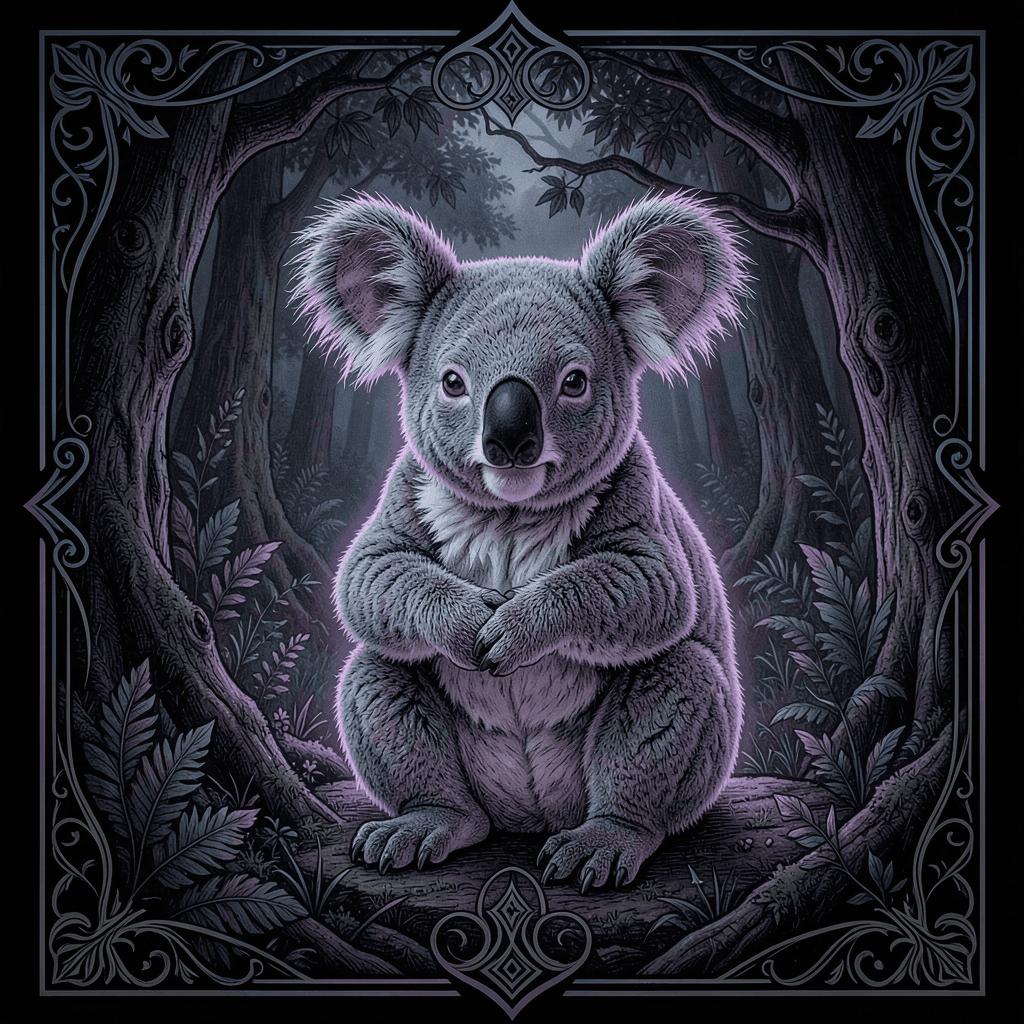
Koala Dream Meaning: What Does Dreaming of a Koala Mean?
Dreaming of a koala is read through rest, holding on, and something slow to wake. What the animal is doing decides which of those applies.
Somnovis editorial team
A koala's dream presence is built on stillness rather than fear: clinging tightly to a branch, sleeping through most of the day, moving only when it genuinely needs to. It's a specific, restful kind of withdrawal — not escape from a threat, but a deliberate conservation of energy the dreamer may recognize in themselves.
A koala clinging tightly and sleeping undisturbed. A koala settled high in its tree, untouched by whatever is happening below, often reflects the dreamer's own need for retreat — low stimulation, protected rest, a legitimate pause rather than avoidance of something.
A koala disturbed or forced down from its tree. A koala interrupted mid-rest, pulled back into activity before it's ready, tends to point to a reluctant return to demands the dreamer had been resting from — an interruption of recovery that hadn't yet run its full course.
A koala holding on rather than sleeping. The grip is as much of this animal as the sleep is, and it is a different image: something that stays attached without effort and without watching, which is not the same as something hiding.
The dreamer being the tree. Reported often enough to name — the koala attached to the dreamer rather than to a branch. It usually concerns being depended on quietly rather than being burdened.
What changes the reading. Whether the stillness was chosen. The whole of the analytical reading below turns on that, and the answer for this particular animal is unexpected.
What it does not mean. A koala is not a bear, and no tradition below carries an inherited reading of it. What is offered here is the traditions' material on rest and on sleep, marked as such, rather than a ruling about this animal that nobody ever made.
Perspectives across traditions
The koala is Australian and the classical corpus never met it. That is the whole of the honest answer about the animal, and it is worth saying in as many words rather than quietly converting into a ruling by analogy.
What the tradition does have a great deal to say about is sleep itself, and it says two things. The Qur'an calls sleep a rest made for people, and lists sleeping by night and seeking provision by day among the signs by which God is known; the midday nap, قيلولة (qaylūla), is a commended practice rather than a lapse. Rest in this tradition is provided for and named a mercy, which is a firmer position than most readers expect and it is not grudging.
Against that sits the prophetic supplication seeking refuge from incapacity and laziness, العجز والكسل (al-ʿajz wa-l-kasal), which makes indolence something to be actively protected against rather than a neutral state. The tradition holds both without treating either as the correction of the other, and that is exactly why a sleeping animal in a dream is genuinely ambiguous in these terms: the question it raises is which of the two the stillness is, and the tradition supplies the distinction rather than the answer.
Analytical psychology reads a withdrawal of energy from the outer world as a movement that may be recuperative or may be evasive, and declines to decide between them from appearance alone. What makes the koala a particular case rather than a generic sleeping animal is that its rest is not elective.
The animal eats eucalyptus, which is low in available energy and carries compounds it must spend further energy neutralising, and it sleeps around twenty hours a day because the diet will not fund anything else. That is a different image from a creature choosing stillness. It is a system whose available energy is genuinely committed elsewhere and whose apparent idleness is the visible part of an invisible expenditure — which is why being pulled out of that rest is not an interruption of leisure, and why the dream of the koala forced down from its tree carries the weight it does.
Two further things about the animal are true and commonly got wrong, and both sharpen the image. It is not a bear; and its name comes from the Dharug word gula, the familiar gloss "does not drink" being a widely repeated folk etymology that is disputed, since koalas do drink, particularly in heat. Koalas also have fingerprints so close to human ones as to be hard to tell apart under magnification. A creature that leaves a human-looking print and is misfiled by nearly everybody who names it makes a serviceable image for something in a dream that is nearer to the dreamer than its exotic surface admits.
The koala has no place in Chinese folk dream material, and it reached the language only in the modern period, under two modern names: 树袋熊 (shùdàixióng), "tree pouch bear", and the transliteration 考拉 (kǎolā). There is no traditional saying attached to it and no manual entry, and this is one of the entries where saying so is the accurate answer rather than a fallback.
What circulates today is contemporary and built on the animal's popularity as a placid, appealing creature — a wish for a pause in a crowded life rather than an inherited portent. That is a real thing for a dream to be about, and it is worth distinguishing from the auspicious-quiet-period reading that gets written here by default, which is a folk logic applied to resting animals in general rather than anything Chinese tradition says about this one.
No Chinese set phrase is supplied for this animal, deliberately. There are idioms about lying low and biding one's time that would fit an English sentence about a koala neatly, and reaching for one would mean presenting strategic concealment as though it were rest — which is a different thing, and would be the exact move of taking an idiom that exists and turning it into a dream ruling that does not.
Sources
The tradition sections draw on these works. That is not a claim that every sentence is a quotation from them. Authorship of the treatise attributed to Ibn Sirin is disputed. The Chinese dream manual is paraphrased: its wording differs by version, so no edition, chapter, or date is named.
- Artemidorus of Daldis, Oneirocritica (2nd century).
- Muntakhab al-Kalām fī Tafsīr al-Aḥlām, the dream book attributed to Ibn Sirin.
- Zhou Gong Jie Meng (周公解梦).
- C. G. Jung, Man and His Symbols (1964), and the Collected Works.
Was your dream different?
Tell us exactly what you saw — our deeply trained AI will work through every detail and nuance of your specific dream.
Get a personal reading