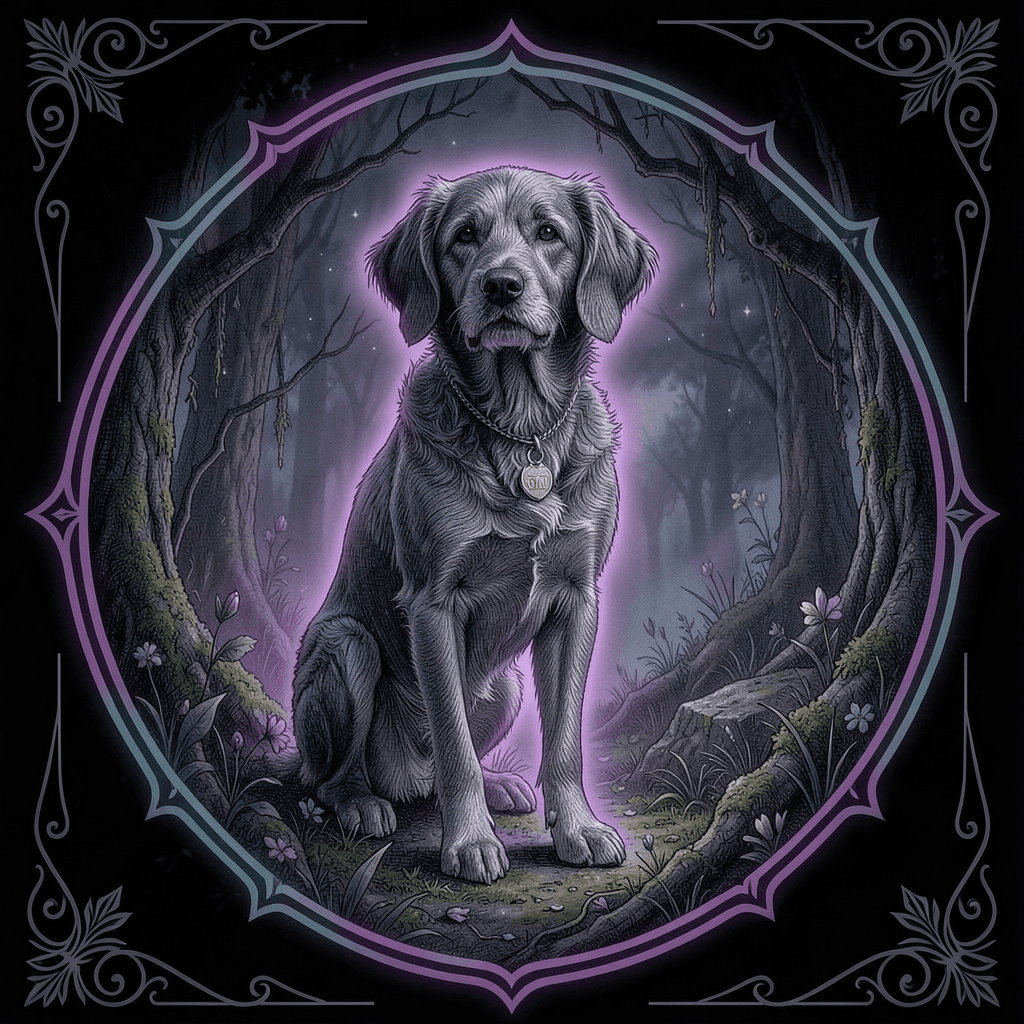
Dog dream meaning — interpretation
What it means to dream about a dog: a loyal or aggressive dog, being bitten, and how different traditions read this symbol.
Somnovis editorial team
A dog is one of the most emotionally direct animals to appear in a dream, and most dreamers already carry a strong personal association with dogs from waking life — which the dream draws on more than any fixed universal meaning. Broadly, a dog stands for loyalty, companionship and instinct, but the tone of the dream usually decides which side of that comes forward.
A friendly or protective dog. A calm, affectionate dog is most often read as a sign of loyal friendship or a trustworthy ally already present in the dreamer's life — sometimes appearing exactly when that support is needed but not yet consciously noticed.
An aggressive dog or a dog bite. A dog that growls, attacks or bites usually points to a betrayal by someone the dreamer considered a friend, or to the dreamer's own suppressed aggression finding an outlet in sleep rather than in waking life.
What changes the reading. Whether the dog is known to the dreamer matters a great deal — a childhood dog carries memory, an unknown one carries symbol. So does its condition: a starving, chained, injured or abandoned dog is a distinct scenario from an aggressive one, and several traditions read it quite differently. A pack of dogs shifts the dream away from a single relationship and towards a situation.
What it does not mean. A dog dream is not a warning about a specific person, and a bite does not identify anyone. It is also not a message about a real pet, living or dead, although grief will readily borrow the image. Dreams of familiar dogs are common and often carry no interpretive weight beyond affection.
Perspectives across traditions
Readings of the dog in the classical Islamic dream-interpretation tradition are mixed, and depend heavily on the animal's behaviour and on the dreamer's relationship to it. A barking or biting dog is read as a hostile person — but characteristically as one who is loud rather than genuinely powerful, pointing more towards slander and harassment than towards real danger. That precision is the useful part of the reading.
A calm or obedient dog can read as a loyal but low-status associate: someone dependable, and dependent. Taken together, the classical material treats dogs with considerably more ambivalence than most Western readers expect, and this is worth stating rather than smoothing over, since the modern reader arrives with an assumption of straightforward affection that the tradition does not share. The image here is closer to a social position than to a companion, and the reading follows accordingly.
Analytical psychology reads the dog as the domesticated instinct — the instinctual nature that has been brought into relationship with consciousness rather than repressed out of it. That framing gives the variants their meaning. A faithful dog points to instinct that serves the dreamer and works alongside them; a sick, starving or chained dog points to instinctual life that has been neglected, and it is usually the more urgent of the two images.
Dogs also carry a guide association at thresholds, drawing on their long mythological role accompanying the dead. Jungian readings connect this to transitions rather than to literal death — a dog appearing at a boundary, a gate or a doorway is read as instinct offering to accompany the dreamer through a passage that consciousness alone cannot navigate. The dog turning hostile in such a dream is therefore read seriously: it describes a part of the dreamer's own nature that has stopped cooperating with them.
Folk interpretation reads the dog favourably, as loyalty, protection and the guarding of the household. A dog barking in a dream is popularly read as a warning to be heeded rather than as a threat in itself — the dog is doing its job, and the dreamer is being told to listen rather than to worry about the animal. That is a folk interpretation and not a ruling out of the dream books, which handle a barking dog quite differently, as set out further down. A friendly dog approaching is associated with the arrival of a loyal friend or of help from a quarter the dreamer had not counted on.
Against that background, a dog biting the dreamer is read as betrayal by someone close, and it is the background that gives the image its sting: the harm comes from exactly the quarter that was supposed to provide protection. This is a good example of how folk material builds a reading out of a relationship rather than out of a fixed correspondence — the bite means what it means because of what the dog is otherwise understood to be.
The favourable reading has a saying behind it, and it is one half of a well-known pair (猫来穷,狗来富): a dog that comes to you brings wealth, while a cat that comes brings poverty. It is worth giving on this page because it explains why an arriving dog is auspicious rather than merely welcome — the animal's approach is itself the omen, independently of what it then does. The pairing is folk material about a real animal turning up at a real door, and it carries into dream interpretation rather than originating there; the corresponding cat reading, including its darker variant about mourning, belongs on that animal's own page.
The manual register reads the dog's actions more flatly than the loyalty frame does, and in one case against it. The folk dream books give readings of the shape: a dog barking portends quarrels or gossip, a dog biting portends plans failing or obstacles in the way, a dog approaching portends a visitor or a happy event, and a dog lying down portends wealth. A bite there is an obstruction rather than a betrayal. The language holds the animal in two hands as well: 「狗不嫌家贫」 (gǒu bù xián jiā pín), a dog does not despise its home for being poor, is half of a pair whose other half says that a son does not think his mother ugly — so what it praises is loyalty that does not weigh what it is loyal to, rather than a simple willingness to stay somewhere poor. Against it runs 「狗仗人势」 (gǒu zhàng rén shì), the dog trades on its master's power, the standard reproach for someone who bullies with backing behind him.
Sources
The tradition sections draw on these works. That is not a claim that every sentence is a quotation from them. Authorship of the treatise attributed to Ibn Sirin is disputed. The Chinese dream manual is paraphrased: its wording differs by version, so no edition, chapter, or date is named.
- Artemidorus of Daldis, Oneirocritica (2nd century).
- Muntakhab al-Kalām fī Tafsīr al-Aḥlām, the dream book attributed to Ibn Sirin.
- Zhou Gong Jie Meng (周公解梦).
- C. G. Jung, Man and His Symbols (1964), and the Collected Works.
Was your dream different?
Tell us exactly what you saw — our deeply trained AI will work through every detail and nuance of your specific dream.
Get a personal reading