Shadow dream meaning — interpretation
What it means to dream about your own shadow: Jung's Shadow archetype made literal, distinct from an unknown haunting ghost.
Somnovis editorial team
Distinct from a ghost, an unknown haunting presence from outside, a shadow in this sense is quite literally one's own shape, cast by one's own light — a dream image that maps directly onto the disowned or unacknowledged parts of the self, following the dreamer precisely because it can't be left anywhere else.
A shadow behaving independently, acting on its own. A shadow that moves or acts without the dreamer's control often reflects an unsettling but genuinely important encounter with a part of the self kept out of conscious view, acting exactly because it hasn't been given space to act openly.
A shadow disappearing entirely, or merging back into the dreamer. Losing one's shadow tends to point to a troubling sense of having lost touch with something essential about oneself, while a shadow rejoining the dreamer can mark real, hard-won integration of a previously disowned trait finally being accepted as their own.
Meeting, fleeing, or being followed. The psychological reading below treats these as three stages of one encounter rather than three dreams — the shadow behind the dreamer, the shadow run from, and the shadow finally faced — and much of this dream's meaning is simply which stage the dreamer is at.
What changes the reading. What the shadow does with its independence matters: mimicking, lagging, acting first, or refusing to appear at all. Light matters too — the shadow needs a light to exist, and where the dream places that light is usually where it places the dreamer's own attention.
What it does not mean. The shadow is not the dream's villain, and nothing below reads it as evil — the material it carries is disowned, which is not the same as bad. Nor is a shadow dream a diagnosis; the readings below are traditions reporting their registers, and the strongest of them explicitly refuses fixed decoding.
Perspectives across traditions
The tradition's own register for shade runs opposite to the unease this dream usually brings: shade is ease. The corpus reads shade as protection and relief — the tradition's paradise imagery runs on it, gardens and extended shade as the very furniture of reward — so rest in shade reads toward relief after exertion, protection found, a matter's heat abating. A dreamer surprised that their tradition reads shadow kindly is usually thinking of the English word's gloom; the corpus is thinking of noon in a desert, where shade is not darkness but mercy.
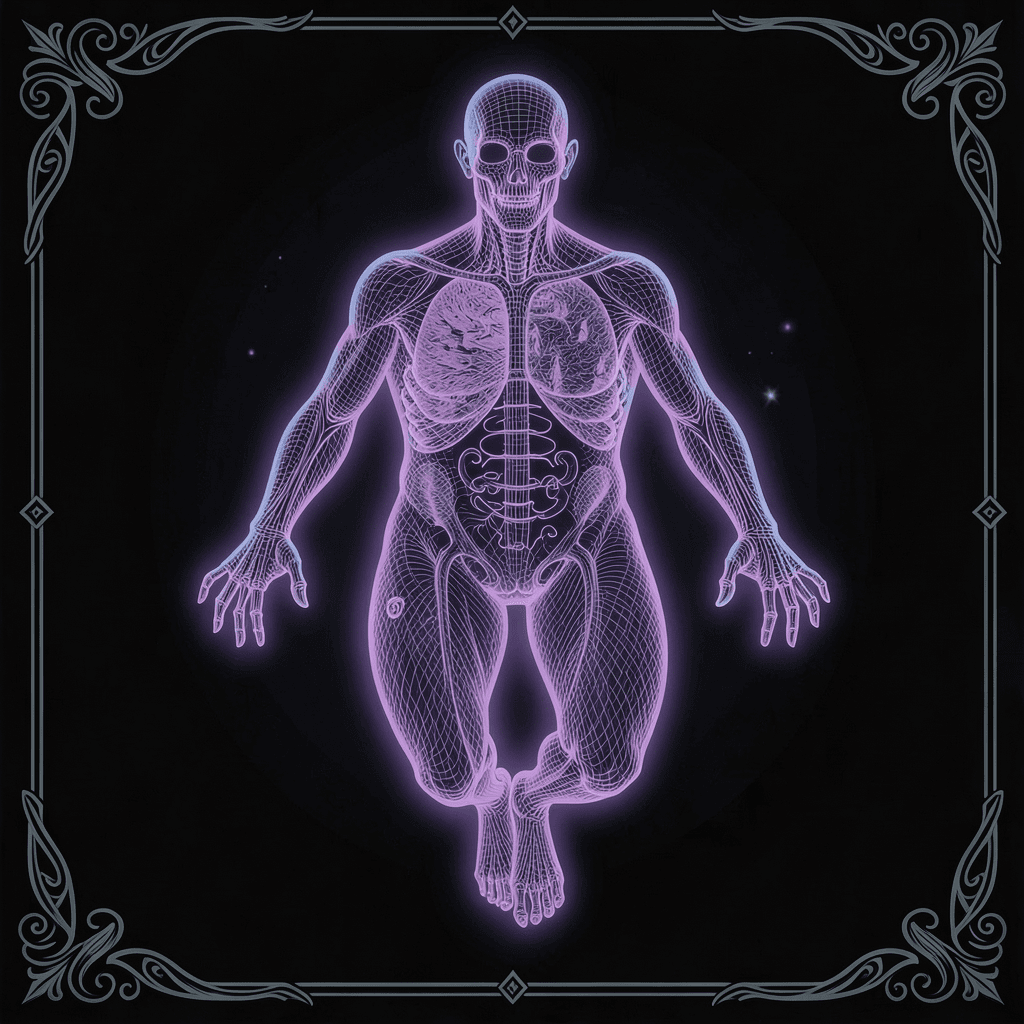
The shadow as this page's image — one's own dark twin, lengthening or detaching — is a different matter, and the honest statement is that it is thin here: the corpus's shade material concerns shelter, and the independent, personal shadow belongs to later folk registers outside the classical books, hedged accordingly to a clause or left alone. What the tradition's method still offers is its usual question — whether the shade in the dream sheltered or unsettled — and its readings follow the answer: the shadow rested in reads as relief; a darkness that pursues belongs not to the shade register at all, but to the corpus's material on what pursues.
This is the one entity on this site whose name is the concept: the shadow is Jung's own term, and this article has always said so — the figure of everything the personality disowned in order to become itself. What deepening adds is the correction most readers need: the shadow is not evil but unlived. What gets exiled is whatever the family, the culture or the chosen self-image had no room for — and that includes talents and appetites as often as shames: the assertiveness filed under aggression, the sensuality filed under indulgence, the ambition filed under vanity. The dream-figure carrying it is typically of the dreamer's own sex, and provokes the specific repulsion of the too-close — the person who repels beyond all proportion is the classic carrier, in dreams and in daylight both.
Meeting, fleeing and being followed are three stages of the same encounter, not three dreams: the shadow followed by is material keeping pace, patient as a shadow; fled from, material gaining; met — turned toward, looked at, even grappled — is the encounter the whole register exists for, and the fight the fighting article reads is often exactly this meeting wearing rougher clothes. The rejection of fixed symbols still applies, and doubly here: the shadow names a relation, not a decoding — what stands in it differs for every dreamer, and no table, this page included, can say what any particular shadow carries. The dream's own repulsions say that.
The traditional dream books have little on the shadow as its own object, and this section says so rather than inventing: the manual register here is thin and hedged, with the shadow appearing at the margins of other entries rather than commanding its own. The language, though, is unusually good on shadows, and its phrases carry the section. 「形影不离」 (xíng yǐng bù lí, form and shadow inseparable) is the standing phrase for the companion so close that the two are one silhouette — and the natural reading for a dream that casts a beloved person as the dreamer's own shadow: not eeriness but attachment, closeness the language measures in shadow-lengths.
「杯弓蛇影」 (bēi gōng shé yǐng, the bow's reflection in the cup taken for a snake) is the tradition's own warning against over-reading: the classic tale of a man sickened by a serpent he believed he had drunk — which was the reflection of a bow hung on the wall — fear manufactured from a harmless image, and a caution this site is happy to let the material aim at itself: some frightening shadows are bows on walls, and the snake article carries the real snake's register. 「立竿见影」 (lì gān jiàn yǐng, set the pole, see the shadow) completes the spread: instant consequence, effect as immediate as a shadow answering the pole — the reading for dreams in which the shadow answers the body's every move, which in this register is not haunting but the world working: cause casting effect, without delay.
Sources
The tradition sections draw on these works. That is not a claim that every sentence is a quotation from them. Authorship of the treatise attributed to Ibn Sirin is disputed. The Chinese dream manual is paraphrased: its wording differs by version, so no edition, chapter, or date is named.
- Artemidorus of Daldis, Oneirocritica (2nd century).
- Muntakhab al-Kalām fī Tafsīr al-Aḥlām, the dream book attributed to Ibn Sirin.
- Zhou Gong Jie Meng (周公解梦).
- C. G. Jung, Man and His Symbols (1964), and the Collected Works.
Was your dream different?
Tell us exactly what you saw — our deeply trained AI will work through every detail and nuance of your specific dream.
Get a personal reading