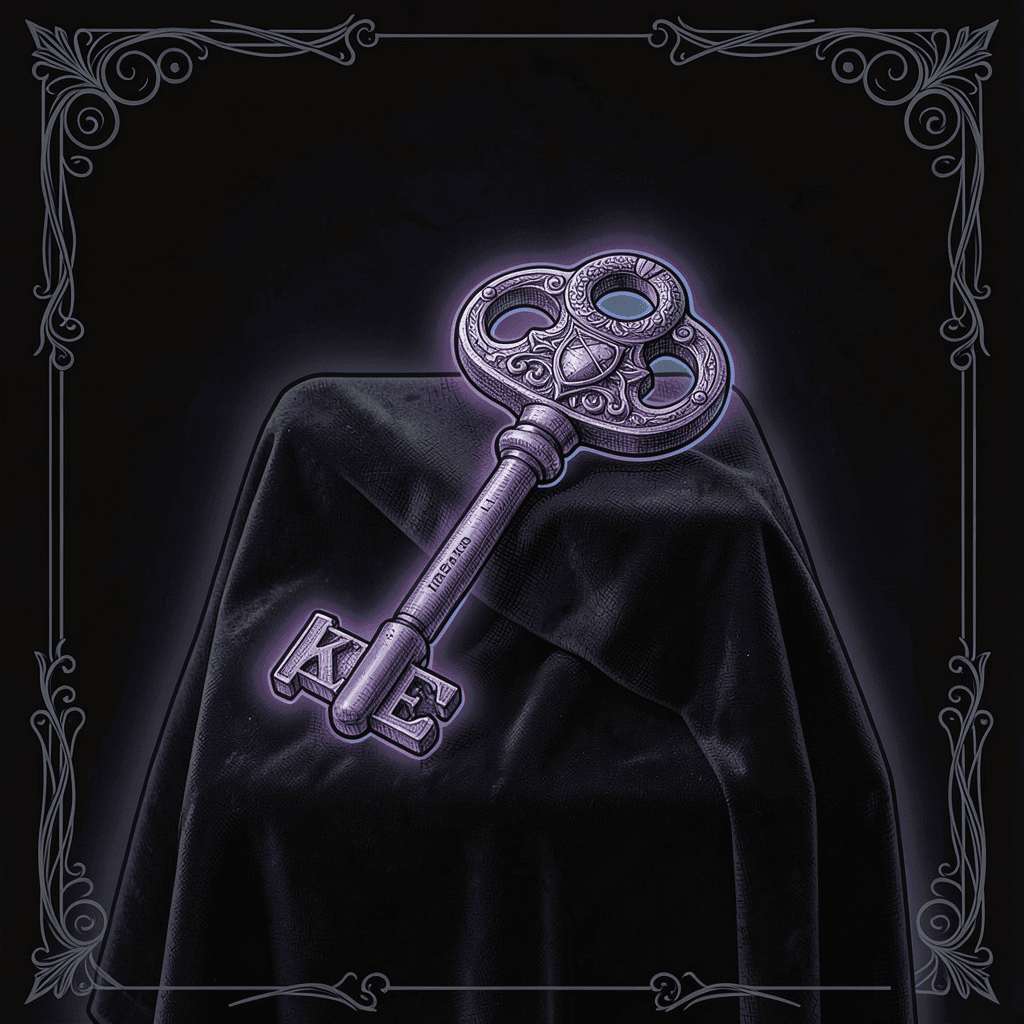
Keys dream meaning — interpretation
What it means to dream about keys: losing or being given a key, a psychological reading, and different traditions' perspectives.
Somnovis editorial team
Keys in a dream are almost always about access and responsibility — what opens (or closes) an opportunity, a relationship, or a stage of life. Unlike many symbols, keys are rarely neutral: the dream usually emphasizes either the relief of a door finally opening, or the anxiety of lost control.
Losing your keys. This is one of the most common anxiety dreams, and it usually reflects a fairly specific waking fear — losing control of a situation, losing access to something important, or losing a trust that would be hard to rebuild. The frantic searching that fills these dreams tends to matter as much as the loss itself.
Being given a key. Being handed a key, especially by someone who hasn't shared one before, is often read as a symbol of trust or of a new level of closeness — access that has just been granted rather than taken.
What changes the reading. A key that doesn't fit, or turns without opening anything, is a distinct scenario from a key that is missing. So is a key ring heavy with keys the dreamer can't identify. And crucially, what the door leads to matters more than the key: a locked room in the dreamer's own home carries a very different charge from a stranger's front door.
What it does not mean. A key dream is not a sign that an opportunity is literally coming, and losing keys in a dream has no bearing on losing them in waking life. Where these dreams are useful is more modest and more practical: they tend to name, quite precisely, which door the dreamer has been standing in front of.
Perspectives across traditions
The classical Islamic dream-interpretation tradition reads keys as authority, access and answered need — the means of opening what has been closed. Receiving a key is read as being granted capacity or permission in a matter that had been blocked, and the image is generally a hopeful one, linked closely to provision and to the resolution of difficulties rather than to any warning.
The variations are precise. Losing keys reads as a loss of control over one's own affairs, which is a different and heavier reading than mere carelessness. A key that will not turn reads as an effort that is not yet ripe — the door is the right one, the moment is not — which makes it a counsel of patience rather than of abandonment. Because the tradition ties keys so directly to what is granted rather than seized, dreams in this family are usually read as describing the dreamer's standing in a matter, not their cleverness in it.
The key is a threshold symbol in analytical psychology: it belongs to the same family as doors, gates and staircases, and points to access between levels of the psyche rather than between rooms. A found key marks a newly available capacity, something the dreamer can now do that they could not before. A lost key marks a resource the dreamer once had and cannot currently reach — which is a different situation from never having had it, and the dream usually knows the difference.
What the key opens matters far more than the key itself. A locked room in a familiar house is read as a part of the self that has been closed off, and the fact that the house is familiar is the point: this is not foreign territory but the dreamer's own, sealed. The image is associated with the individuation process precisely because it implies something is behind the door. A key in a dream is, in this sense, less a solution than a statement that a solution has a location.
Folk interpretation reads keys favourably, as the opening of opportunity and the resolution of situations that have been stuck, usually in the specific domains of career and household rather than in inner life. Receiving keys is associated with new responsibility or with a new home, and the two are often read together, since taking on a household and taking on a duty are not sharply separated in this material.
The unfavourable readings are correspondingly concrete. Losing keys is a warning about carelessness with something the dreamer is responsible for — the emphasis falls on the responsibility rather than on the loss. A broken key is read as an opportunity that will not come to anything despite genuine effort, which is a notably specific and rather bleak reading: not that the dreamer failed to try, but that the trying was aimed at something that was never going to open.
The manual register is more concrete than the career-and-household framing, and it puts the lock rather than the key at the centre. The folk dream books give readings of the shape: a key portends settling somewhere or acquiring property, a lock coming open portends good fortune, a lock being shut portends misfortune. Losing keys is read there towards theft or unrest in the household rather than towards carelessness, and a broken key towards a task interrupted or a tie broken rather than towards effort wasted. The saying that carries the image is 「一把钥匙开一把锁」 (yī bǎ yào shi kāi yī bǎ suǒ), one key opens one lock — used to mean that every problem has its own particular solution and not somebody else's, which is the sense a key in a dream lands in for a Chinese reader.
Sources
The tradition sections draw on these works. That is not a claim that every sentence is a quotation from them. Authorship of the treatise attributed to Ibn Sirin is disputed. The Chinese dream manual is paraphrased: its wording differs by version, so no edition, chapter, or date is named.
- Artemidorus of Daldis, Oneirocritica (2nd century).
- Muntakhab al-Kalām fī Tafsīr al-Aḥlām, the dream book attributed to Ibn Sirin.
- Zhou Gong Jie Meng (周公解梦).
- C. G. Jung, Man and His Symbols (1964), and the Collected Works.
Was your dream different?
Tell us exactly what you saw — our deeply trained AI will work through every detail and nuance of your specific dream.
Get a personal reading