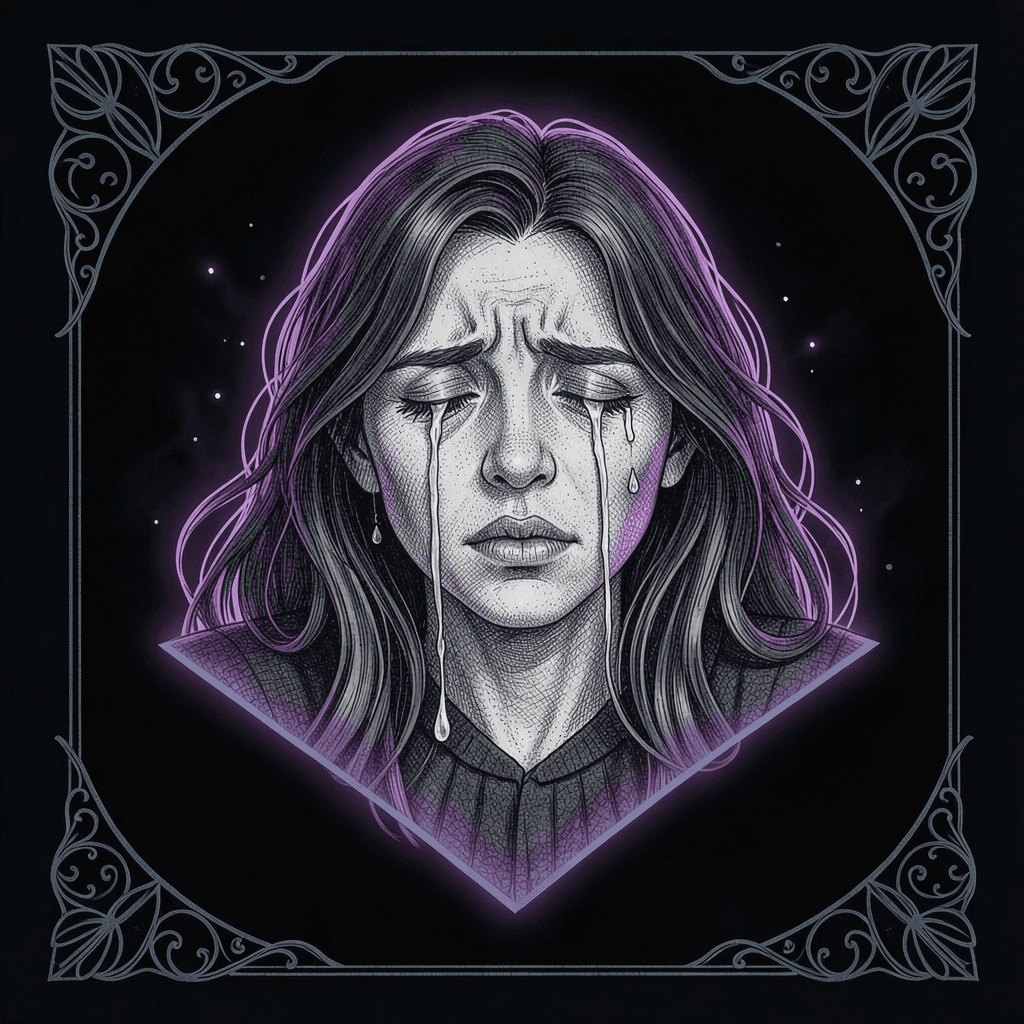
Dreaming about crying — meaning and interpretation
What it means to dream about crying: emotional release, and how different traditions interpret this scenario.
Somnovis editorial team
Crying in a dream is closely tied to emotional release, much like rain, but more personal and direct — grief, relief, or frustration the dreamer may not be fully expressing while awake finding an outlet in sleep instead.
Crying from sadness or grief. Weeping over a clear loss in the dream often reflects genuine, perhaps still-unprocessed grief the dreamer hasn't fully allowed themselves to feel during waking hours.
Crying tears of joy or relief. Crying that comes from happiness rather than sorrow tends to point to built-up tension finally finding release — often appearing just after, or in anticipation of, a genuine resolution to something that had been weighing on the dreamer.
What changes the reading. The traditions below care about the form of the crying more than its cause: quiet tears, loud wailing, weeping with others, weeping without knowing why. Where the crying happens, and who else is present, also shift the readings — in ways the traditions disagree about more sharply here than almost anywhere else on this site.
What it does not mean. Crying in a dream is not a symptom, and nothing on this page reads it as evidence about the dreamer's mental health or emotional state — the readings below are cultural traditions reporting what they hold, not assessments of anyone. Waking up in tears, which is common, is also not a message in itself; dreams recruit the body, and sometimes the body simply answers.
Perspectives across traditions
The classical Islamic dream-interpretation tradition draws a sharp and well-attested line here, and the line is the entry: quiet weeping — tears without voice — is read favourably, as relief, release from grief, or a hardship about to lift; loud wailing, shrieking, or tearing at clothes and face is read unfavourably, as calamity or as grief still to come. The distinction is not about how sad the dreamer is. It is about the form the grief takes.
The line mirrors the tradition's own attitude to mourning in life, where restraint is enjoined and lamentation is not — and that mirroring is worth seeing plainly, because it shows a coherent tradition applying its own values to the dream world rather than an arbitrary table of omens. Tears themselves are not the problem in this material; they are read gently, even hopefully. What tips the reading is the abandonment of composure, in the dream exactly as at a graveside.
In a Jungian reading tears are affect reaching expression — the dream providing a channel that waking life has kept closed. This connects directly to the compensatory function Jung genuinely developed: a one-sided conscious attitude producing its opposite in the dream, so that a composure maintained too thoroughly by day can be answered by weeping in sleep. The reading describes a mechanism, not a diagnosis — what analytical psychology attends to is what the crying is for, not what is wrong with the person doing it.
The variant this tradition finds most informative is the common dream of weeping without knowing why: affect arriving before its content does, feeling that has outrun the story it belongs to. Being unable to cry in a dream, or crying without tears, is read as the same material blocked — the channel open but nothing permitted through it. In each case the question is the same and deliberately modest: what has been waiting for expression, and what form the waking attitude has been refusing it.
Folk reading applies 反梦 (fǎn mèng), the inverse-dream principle, to weeping directly: a dream of crying is commonly read as pointing towards good news rather than bad, and weeping is one of the principle's most-cited applications. But the manual register is more discriminating than one rule, and its entries are worth giving in detail because they show the tradition making distinctions: readings of the shape that weeping together with someone portends something to celebrate, that weeping aloud portends joy, that weeping in bed is strongly inauspicious, and that weeping with the teeth bared portends litigation. The same act, distributed across circumstances, is read four different ways.
Set beside the Islamic material above, this produces the sharpest cross-tradition contrast in this corner of the site: loud wailing is favourable in the Chinese entries and unfavourable in the Islamic, where restraint is the whole distinction — the same act, opposite verdicts, for reasons internal to each tradition. One further distinction the folk material makes: a deceased person weeping in a dream is usually read as having an unfinished wish, or as suffering, calling for ritual observance — which is not 托梦 (tuō mèng), the dead entrusting a message; that names a different case, in which the dead actively communicate rather than grieve.
Sources
The tradition sections draw on these works. That is not a claim that every sentence is a quotation from them. Authorship of the treatise attributed to Ibn Sirin is disputed. The Chinese dream manual is paraphrased: its wording differs by version, so no edition, chapter, or date is named.
- Artemidorus of Daldis, Oneirocritica (2nd century).
- Muntakhab al-Kalām fī Tafsīr al-Aḥlām, the dream book attributed to Ibn Sirin.
- Zhou Gong Jie Meng (周公解梦).
- C. G. Jung, Man and His Symbols (1964), and the Collected Works.
Was your dream different?
Tell us exactly what you saw — our deeply trained AI will work through every detail and nuance of your specific dream.
Get a personal reading