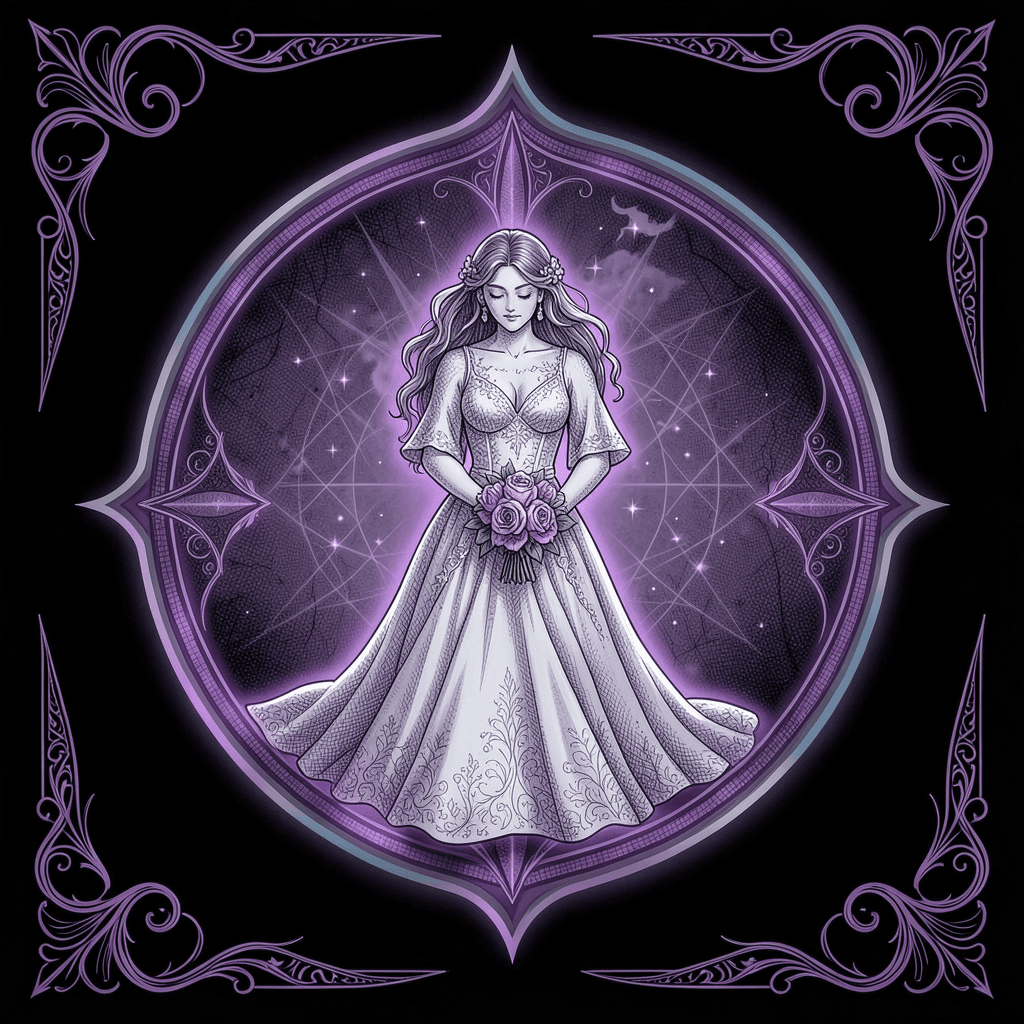
Wedding dream meaning — interpretation
What it means to dream about a wedding: your own wedding, someone else's, or a wedding going wrong.
Somnovis editorial team
A wedding dream is rarely just about marriage — it's a symbol of union in a much broader sense: two parts of the dreamer's life, or two parts of themselves, coming together and committing to a shared direction, which is why single, married and engaged dreamers alike report this dream fairly evenly.
One's own wedding going smoothly. A calm, joyful wedding usually points to a sense of readiness — a decision or commitment the dreamer feels genuinely settled about, whether or not it involves a partner at all.
A wedding disrupted or going wrong. A cancelled ceremony, a missing groom or bride, or a wedding interrupted by disaster more often reflects the dreamer's own doubts about a commitment already in motion, rather than a warning about the relationship itself.
What changes the reading. Who is getting married, and whether the dreamer is participant or observer — this distinction matters in nearly every tradition below. Whether the partner is known or faceless. Whether the ceremony is public and loud or quiet and small. And whether the dreamer feels joy, dread, or the peculiar flatness that many people report at dream weddings.
What it does not mean. A wedding dream does not forecast a wedding, a proposal, or a breakup, and dreaming of marrying someone specific says more about what that person represents than about any wish concerning them. Dreaming of one's own past wedding is common at anniversaries and during periods of reassessment, and rarely means more than that the dreamer has been thinking about a commitment they made.
Perspectives across traditions
Marriage imagery is read as union, contract and binding commitment in the classical Islamic dream-interpretation tradition — and often as a change of state in the dreamer's affairs rather than as a literal marriage on the horizon. The emphasis on contract is worth noting, since it places the dream closer to obligations entered into than to romance.
The classical material treats some wedding dreams with caution, and certain celebratory imagery is read in inverse relation to funerary imagery, which is a reading a modern dreamer will not anticipate. The identity of the partner matters: an unknown partner is read as the nature of the undertaking the dreamer is entering rather than as a person they will meet. Weddings accompanied by music and public display are sometimes read less favourably in the older material than quiet ones — the scale of the celebration being treated as a variable in its own right rather than as decoration.
The wedding is the coniunctio in analytical psychology — the union of opposites, and one of the central images of the individuation process. Jungian reading treats an inner marriage as the integration of the contrasexual figure, the anima or the animus, rather than as a statement about the dreamer's actual relationships, and this is one of the places where taking a dream literally does the most damage to its meaning.
Who is being married, and whether the dreamer is participant or observer, carries the reading. Watching a wedding is a different psychological position from standing at the altar, and the dream is precise about which one it puts the dreamer in. Reluctance or panic at the altar is read as resistance to a synthesis the psyche is proposing — not as a warning against the union but as a report on how the dreamer is receiving it. The image describes something being joined; the dream's emotion describes how welcome that is.
Weddings are read within the family-and-fortune frame in Chinese folk material, generally as auspicious for household prospects and for matters that require cooperation between people. Red imagery reinforces the favourable reading wherever it appears, carrying its usual associations of celebration and good fortune into the dream.
Some folk material, however, carries an inverse association between wedding and funeral imagery, treating each as an omen of the other — an ambiguity that should be reported rather than tidied away, since it genuinely exists within the tradition and is not a misunderstanding of it. A wedding that goes wrong within the dream is read more straightforwardly, as a partnership or an agreement that will not hold. That reading applies as readily to business as to marriage, which fits the frame this material generally works in.
The manual register gives direct judgements where the frame above gives a tendency. The folk dream books give readings of the shape: taking a wife portends good fortune, marrying off a daughter portends good fortune, a couple quarrelling portends misfortune, and a wedding that goes wrong portends misfortune. Two phrases carry the image. 「红白喜事」 (hóng bái xǐ shì), red and white happy events, is the ordinary collective term for weddings and funerals together, and it is why the two are read in relation to each other at all. 「洞房花烛夜」 (dòng fáng huā zhú yè), the candlelit night in the bridal chamber, is named in the traditional list of life's great joys, which is why a wedding dream is read as a strong favourable sign, particularly for someone unmarried.
Sources
The tradition sections draw on these works. That is not a claim that every sentence is a quotation from them. Authorship of the treatise attributed to Ibn Sirin is disputed. The Chinese dream manual is paraphrased: its wording differs by version, so no edition, chapter, or date is named.
- Artemidorus of Daldis, Oneirocritica (2nd century).
- Muntakhab al-Kalām fī Tafsīr al-Aḥlām, the dream book attributed to Ibn Sirin.
- Zhou Gong Jie Meng (周公解梦).
- C. G. Jung, Man and His Symbols (1964), and the Collected Works.
Was your dream different?
Tell us exactly what you saw — our deeply trained AI will work through every detail and nuance of your specific dream.
Get a personal reading